

How a Movie Called "Million Views" Sent Me on an Unforgettable Journey to Nepal
- Nishant Dhanaanjayy
- Dec 26, 2025
- 3 min read

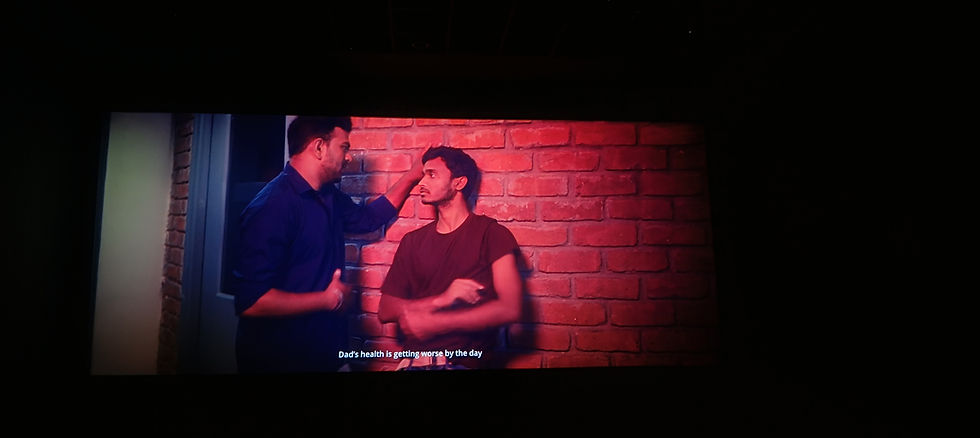
Last week, a film I acted in, “Million Views,” had its theatrical release. But the real story wasn’t just on the screen—it was my impulsive trip to Nepal for its release there, which turned into a solo adventure of chaos, beauty, and profound peace.
Pashupatinath Temple
It all started at the Raxaul border. I crossed just before it closed at 6 PM, only to find all cabs gone. My director, Anshul Sinha, had given me sage advice: exchange only what’s necessary at the border. With a handful of Nepali Rupees (at 1 INR = 1.6 NPR), I booked a last-minute bus to Kathmandu for 1300 NPR. With an hour to kill, I fueled up with a hearty non-veg thali for 250 NPR—my first taste of Nepal, literally.
Then, the disconnect. My Indian number stopped working. The sudden digital silence was jarring, leaving me with only WhatsApp and my own wits. The 10-hour bus ride, however, was a luxury sleeper, winding through invisible hills under a starlit sky. I arrived at 4 AM, swallowed by the cool, quiet darkness of a city still asleep.
Anshul, already in Kathmandu, guided me via WhatsApp to a dormitory. I hired a lone bike in the pre-dawn, and my first, immediate shock was the **cleanliness**. The roads, the sidewalks—it was spotless, a serene welcome. The dormitory was another surprise: beautiful, hygienic, and peaceful. We caught a few hours of sleep, charged by the excitement of the day.
The highlight? Walking into the Big Movies theatre at City Center for our IMAX screening. To see myself, our story, projected on that colossal screen in a foreign land was a thrill I can’t describe. It was a personal “million views” moment, far from home.
But the film was just the catalyst. The real magic began after. I visited the Monkey Temple (Swayambhunath), a Buddhist stupa perched on a hilltop. The climb was worth every step. From the top, Kathmandu unfolded—a sea of terracotta roofs framed by distant hills and mountains. I sat there, calmly, for two hours, watching the vibrant Nepali crowd and those beautiful, resilient faces. As the sun dipped, a cool breeze swept in, so potent it finally chased me down the hill.
Getting lost that evening was the best part. The landmarks I’d memorized faded under the glow of stunning street lights. The night transformed the city into a handcrafted labyrinth of shadows and warmth. I roamed for hours, simply enjoying the stunning streets, forgetting my path entirely. It was only after thoroughly losing myself that I asked a local for directions back to the hostel, each interaction warm and helpful.
The next morning, I sought out Pashupatinath Temple. In the early hours, it was less busy, humming with a strong, positive vibe. I found a quiet spot at the back to just breathe and meditate, absorbing the sacred energy. Roaming the complex, each area had a different pulse. One courtyard held a powerful *Rudhraabhishek*—a group of devotees chanting mantras in unison, their devotion palpable in the air.
My temple journey continued: a local bus to Koteshwar, then a bike (250 NPR) to the breathtaking Boudha Stupa. The giant, all-seeing eyes of the Buddha, the swirling prayer flags, the murmuring pilgrims—it was an aesthetic and spiritual masterpiece.
As I packed to return to India, my train ticket in hand, I realized this wasn’t just a promotional trip. “Million Views” was the reason, but Nepal itself was the story. It was a lesson in going with the flow—from border hiccups and digital disconnection to the luxury of a long bus ride. It was in the cleanliness of the streets, the dignity of ancient temples, and the kindness in people’s eyes.
I went for a movie. I returned with a memory of a million beautiful views, forever etched not on a screen, but in my mind.


Comments